II · Ancient Age
Realm of Greece: Labyrinth Island
The realm of Greece covers maps 31–40, and its map is called Labyrinth Island. The labyrinth walls shift from time to time. Here you fight Skeleton Hoplite, Satyr Archer and Harpy; the elite is Cyclops and the boss is Medusa, the Gorgon.
- Age
- II · Ancient Age
- Maps
- Maps 31–40
- Mythology
- Greek mythology
- Map rule
- The labyrinth walls shift from time to time.
Exhibit note
In myth and history
In Greek myth Medusa is one of the three Gorgons, daughters of the sea deities Phorcys and Ceto. Hesiod's Theogony places the Gorgons beyond the river Ocean, in the frontier land towards Night. Her sisters Stheno and Euryale were immortal; Medusa alone was mortal. When Perseus cut off her head, Chrysaor and the winged horse Pegasus sprang from her neck. According to the National Archaeological Museum in Athens, her gaze turned anyone who looked her in the face to stone. Perseus killed her with Athena's help and gave the head to the goddess, who placed it on her aegis and shield.
Later accounts add detail. In Ovid's Metamorphoses, Perseus tells how, on the way to Medusa's home, he passed figures of men and animals turned to stone by the sight of her face. In the same work Minerva (Athena) changes Medusa's hair into snakes to punish a crime committed in her temple. The realm's elite, the Cyclops, comes from another tradition. In Homer's Odyssey, Odysseus tricks the Cyclops Polyphemus by giving his name as "Noman" (Nobody), then blinds him by driving a heated stake into his eye.
Where the game departs from the myth
- Medusa as "the guardian of the labyrinth island" is the game's invention. Hesiod places the Gorgons beyond the river Ocean.
- Ovid mentions figures turned to stone, but statues that come back to life as Skeleton Hoplites are the game's invention.
- In the game the gaze only slows the hero and does not kill. In the myth her gaze turns people to stone.
- Snake hair that spits venom orbs and the summoning of harpies are the game's invention.
This section describes the myth and the history themselves; the sections below are the game's interpretation. Sources are at the end of the page.
In the game: enemies
Each enemy teaches you something. At the end of the realm the elite tests it at its hardest.
-
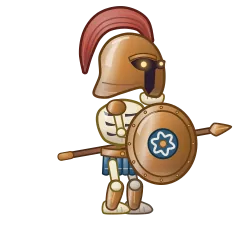
Skeleton Hoplite
Shielded
Turns slowly toward the hero (90°/s) and walks where it faces. Its shield blocks half of the hits from the front (±60°) and flashes when it blocks. Strike from the side or behind: a hero circling it gets past the shield.
Teaches: positioning
-
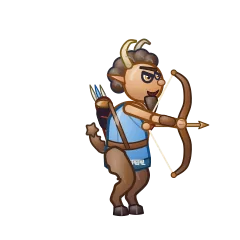
Satyr Archer
Ranged
Keeps 190 px away and leaps back if you come closer than 140 px. Draws its bow for 0.5 s, then shoots a purple, parryable arrow (every 2.6 s, 300 px range). Parry your way forward to close in on a ranged enemy.
Teaches: beating ranged enemies by parrying
-
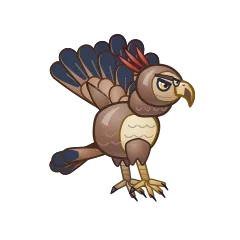
Harpy
Flying
Takes off when you come close (it can't be hit in the air); its shadow grows for 0.8 s where the hero stands, then it dives there in an arc (1.5× its bite). After landing it stays on the ground for 0.8 s and takes ×1.5 damage. It flies over the labyrinth walls.
Teaches: threats from the air
-
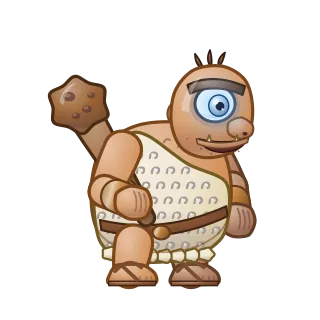 Elite
Cyclops
Elite
Raises its club and waits 1 s (red ring, 120 px), then slams the ground and sends out a shock wave (heavy hit). Every 4.5 s. Its single eye is its weak point: it glows pale blue at regular intervals and takes ×2 damage while glowing.
Teaches: positioning against area damage
From the game
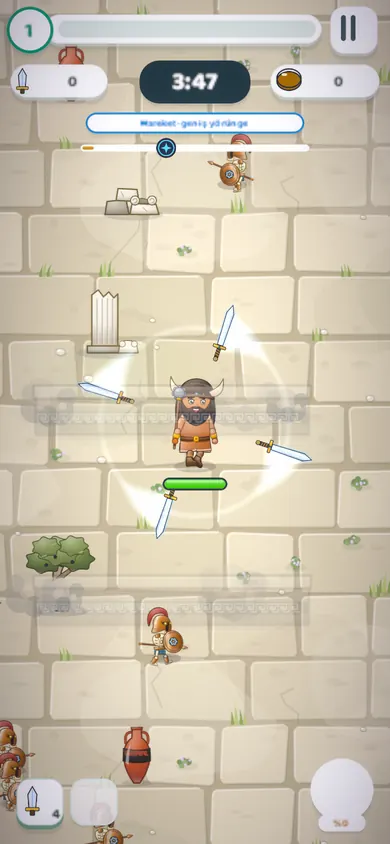
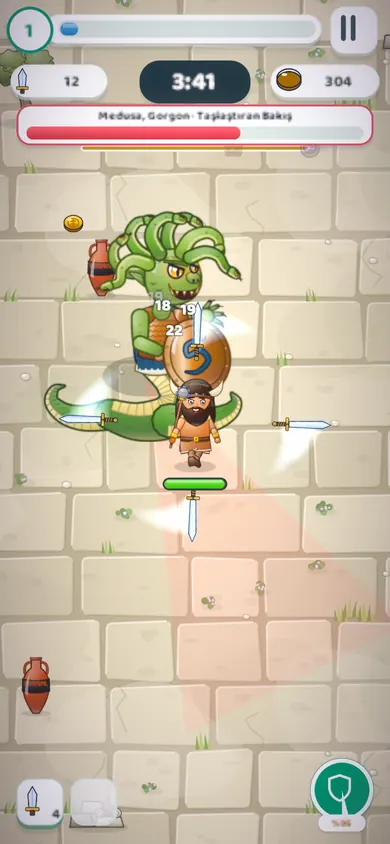
Screenshots show the game's Turkish interface; English ones will follow.
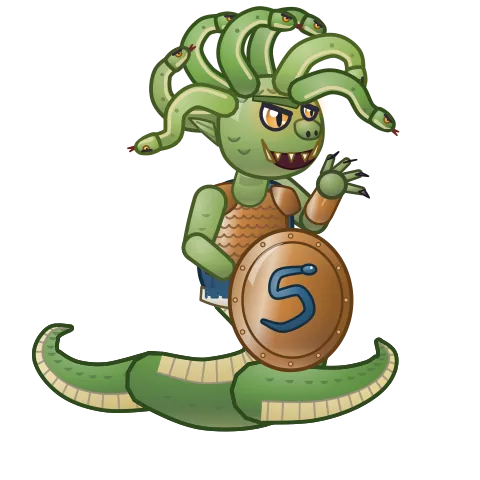
Boss · map 40
Medusa, the Gorgon
The guardian of the labyrinth island; the statues in the arena are heroes who once faced her.
| Phase and health | What it does | Counter |
|---|---|---|
| Serpent Hair100–65% | Keeps her distance; every 3.2 s the snakes in her hair spit 8 purple venom orbs in all directions; every 15 s she calls 2 Harpies. | The orbs can be parried; slip through the gap in the ring to close in. |
| Petrifying Gaze65–30% | Her eyes glow: a red cone warning for 1 s, then the gaze opens. A hero in the cone turns to stone for 2 s (slowed to 35% speed) and takes light damage; it does not kill outright. A sparse ring of orbs in between. | Step aside out of the cone. With the Mirror Shield up the gaze reflects back: Medusa is stunned for 2 s and takes ×3 damage. |
| Statue Garden30–0% | 3 stone statues rise around the hero; a statue left standing comes alive as a Skeleton Hoplite after 7 s (every 11 s). The gaze comes less often. | Break the statues, or step behind a statue against the gaze: the stone blocks it. |
First victory reward
- Xiphos blueprint
- Aegean Bronze set piece
- Cosmetic: Gorgon Gaze eye effect
Phases and numbers come from the current version of the game and may change with balance updates.
The realm's kit
The realm's own weapon, armour set and myth power.
Realm weapon
Xiphos and Spear
A piercing spear thrust in the direction you move.
Armour set
Aegean Bronze
2 pieces: Damage taken −12%. 4 pieces: 30% of parried projectiles fly back at enemies.
Myth power
Mirror Shield
Every projectile counts as parryable and is reflected back (Perseus's polished shield).
Sources
- Hesiod, Theogony, lines 270-303 (translation by Hugh G. Evelyn-White) · Perseus Digital Library, Tufts University
- Ovid, Metamorphoses, Book 4 (translation by Brookes More) · Perseus Digital Library, Tufts University
- Homer, Odyssey, Book 9 (translation by A. T. Murray) · Perseus Digital Library, Tufts University
- The fatal look of Medusa · National Archaeological Museum, Athens